Many first-timers book an all-inclusive resort with a simple idea in mind: pay once, relax completely. Then the questions start. What does the price actually cover? How do meals and drinks work day to day? And which surprises might show up on your arrival or, worse, on your final bill?
This guide walks you through the basics before you go. We’ll break down what’s typically included in an all-inclusive resort stay, when to book and for how long, how dining and drinks operate on the ground, and what to pack. You’ll also find tips on daily activities, kids’ clubs and quiet zones, plus the most common mistakes first-timers make and how to avoid them. With a little preparation, you can enjoy your stay without guessing what each moment costs.
What’s Actually Included in an All-Inclusive Resort Stay
The appeal of an all-inclusive resort is simple: one rate that covers most of your vacation. Base rates typically range from roughly $150 to $500 per person per night, and that price usually includes your room, all meals, snacks, standard drinks and most on-site activities. In practice, this means you can eat breakfast, lunch and dinner, sip poolside cocktails and join beach volleyball without reaching for your wallet each time.
Water lovers are often pleasantly surprised too. Non-motorized watersports like kayaking and snorkeling gear are commonly included in the base rate, so you can borrow equipment and head out on the water at no extra cost.
What usually costs extra
That said, the “all-inclusive” label has limits. Expect additional charges for premium liquors, spa services and off-site excursions, and sometimes for specialty à la carte restaurants as well. Before you book, read the resort’s inclusions list carefully so you know exactly where the covered services end and the extras begin.
When to Book an All-Inclusive Resort and for How Long
Timing your booking matters more at all-inclusive resorts than at most other types of accommodation, because rates swing widely with the season. Reserve 3-6 months out for balanced prices, or 8-11 months ahead if you’re targeting peak season weeks. Peak season at Caribbean and Mexican resorts runs December through April, when demand is highest and rooms sell out first.
Traveling in shoulder season
If your schedule is flexible, September and October offer the lowest rates of the year. These months fall within hurricane season, which spans June to November, so you’re trading a lower price for some weather risk. Many travelers accept that trade for the savings, but consider travel insurance and check your resort’s cancellation policy before committing.
As for trip length, plan on 5-7 nights. That’s the standard package length most resorts build their rates around, and it gives you enough time to settle in, work through the restaurants and actually unwind rather than feel rushed. Shorter stays can work, but you’ll spend a bigger share of your trip checking in and finding your way around.
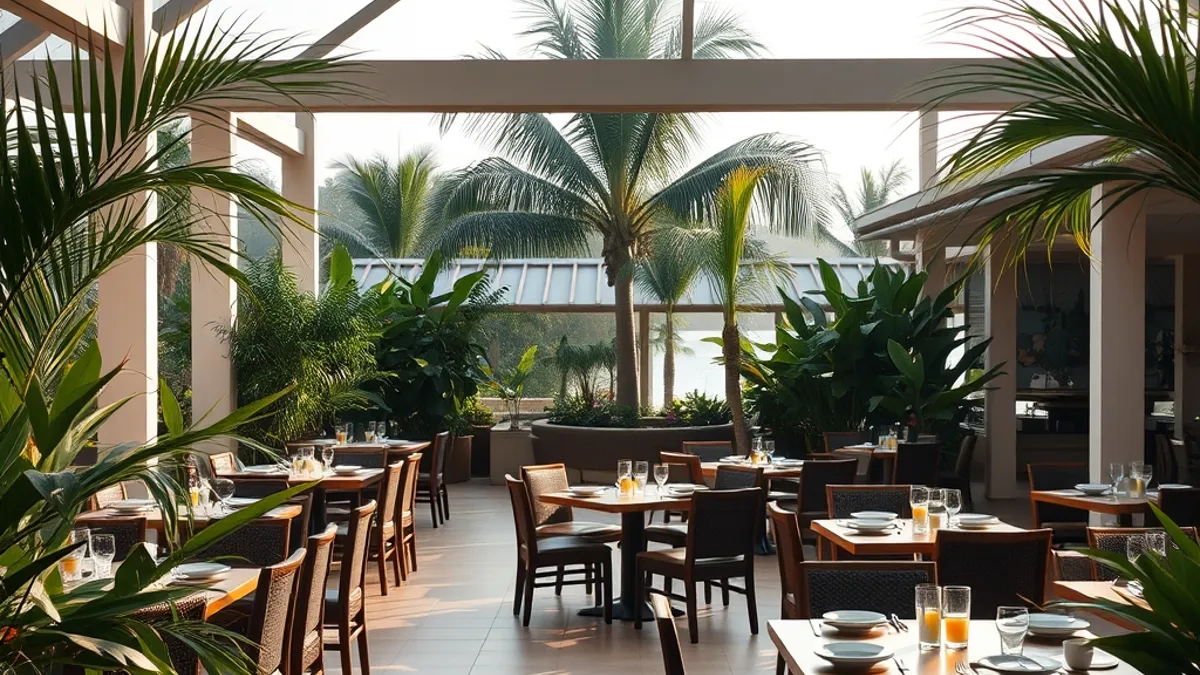
Dining and Drinks: How Meals Work Day to Day
Food is where all-inclusive resorts earn their reputation, and most properties deliver plenty of variety. A typical resort includes 3-8 restaurants in the base price, mixing large buffets with smaller bookable à la carte venues. Buffets handle breakfast and lunch with no planning required, which makes them the easy default on busy days. The specialty restaurants are where you’ll want to be a bit organized, because they’re often the highlight of the stay and the seats everyone else is competing for.
Here’s the key detail many first-timers miss: à la carte restaurants often require reservations, and the popular time slots fill up fast. Make your bookings through the resort’s app or the concierge early in your stay, ideally on your first day, rather than waiting until you’re hungry. If the slot you want is gone, ask about waitlists or cancellations, since plans change and tables do open up. Some resorts also limit how many specialty dinners each guest can book per week, so confirm your allowance before you build your plans around them.
Drinks follow a similar pattern. Standard cocktails, beer and house wine are included throughout the resort, from the pool bar to the dinner table. Premium spirits, however, may carry a surcharge, so ask which brands fall under the included list before ordering. A quick question at the bar saves an awkward charge on your final bill.
- Check the dress code before dinner. Many à la carte venues are more formal than the buffets, so a reservation may not help if you arrive in swimwear and flip-flops.
- Ask about menu limitations. Some all-inclusive plans offer a separate, reduced menu at specialty restaurants, with the full menu available for an extra fee.
- Use room service if it’s included. Many resorts include basic room service in the rate, which is handy for late arrivals or quiet nights on your balcony.
Packing and Money Tips for Your First All-Inclusive Resort
Packing for an all-inclusive resort is easier than packing for most trips, but a few small oversights can cost you comfort and money. The biggest surprise for first-timers is the dress code at dinner. While breakfast and lunch are strictly swimsuits-and-flip-flops territory at most properties, many dinner venues enforce a resort-casual standard, and staff can and do turn guests away.
Before you zip your suitcase, make sure you have at least a couple of outfits that work for evening dining. For men, that typically means long pants and covered shoulders; for women, a sundress, jumpsuit or nice separates fits the bill. Check your resort’s dress code details before you pack, since requirements vary between properties and even between restaurants at the same resort.
Money matters are simpler here than almost anywhere else you’ll travel, but there’s a catch: many resorts have no on-site ATMs, and the nearest one may be a taxi ride away. Bring small bills for tipping, in local currency or US dollars depending on your destination. Your room key or wristband usually doubles as your charge card on property, so spa bookings and excursions go on a tab you settle at checkout — leave breathing room on your card for those extras.
- Closed-toe or dress shoes for dinner: some à la carte venues also have footwear rules, so flip-flops may not pass at night even if they’re fine all day.
- A waterproof pouch or lanyard: many resorts use wristbands instead of key cards, but you’ll still want a way to carry a room card, cash and ID to the pool or beach.
- Small-denomination bills only: staff may struggle to break larger notes for tips, so bring plenty of ones or fives rather than relying on change.
- Reef-safe sunscreen: several Caribbean and Mexican destinations restrict certain sunscreen formulas, and buying it on property is usually far pricier than packing it.
On-Site Life: Activities, Kids’ Clubs and Quiet Zones
Once you’ve checked in, the daily rhythm of the resort takes over — and that rhythm looks very different depending on where you’re staying. Nearly every all-inclusive posts a daily schedule of activities, either on a board by the main pool, on printed handouts or through the resort’s app. Expect a rotation of pool games, beach volleyball, fitness classes like aqua aerobics, cocktail-making demos and themed evening entertainment.
You’re never obligated to join anything. Plenty of guests treat the schedule as background noise and spend the week horizontal with a book. But knowing what’s happening when — and where — helps you plan around the crowds if the main pool gets loud at 3 pm for a dance contest.
Family resorts vs. adults-only
This is the single biggest fork in the road when choosing your property. Family-focused resorts run supervised kids’ clubs, typically split by age group, with organized crafts, games and play areas that give parents real downtime. The trade-off is energy: splash zones, swim-up bars full of families and early bedtimes for the evening shows.
Adults-only properties flip that equation entirely. You’ll find quiet pools, serene zones with a no-noise policy, later dinner service and a calmer pace overall. Neither style is better — but the on-site rhythm differs sharply between the two, so decide your resort style first rather than after you’ve booked. A honeymoon couple at a family resort or a young family at a silent adults-only property are both common and avoidable mismatches.
Common First-Timer Mistakes at All-Inclusive Resorts
Most first-timer mistakes at all-inclusive resorts come from the same root cause: assuming the property works like a regular hotel. It doesn’t, and the fine print matters. Here are the missteps we see over and over — and how to sidestep each one.
The first is skipping the resort orientation. Many resorts offer a welcome session or briefing on your first morning, and it’s tempting to blow it off in favor of the pool. Resist that urge. Staff use these sessions to explain how restaurant bookings work, which activities are included and how charging things to your room operates. Ten minutes here can save you days of confusion.
The second mistake is going the opposite direction: leaving the property daily. If you’ve prepaid your meals and drinks on-site, every lunch you eat in town is money already spent going to waste. Off-site excursions are wonderful, but balance them against what you’ve already paid for.
- Assuming everything is free: motorized watersports, off-site excursions and spa treatments almost always cost extra, and some à la carte restaurants carry a surcharge too — check the included-services list at check-in rather than guessing.
- Not reading the fine print on “free” activities: some resorts include non-motorized watersports but require deposits or advance sign-up for gear like snorkel sets and kayaks.
- Ignoring the checkout bill until the last night: extras accumulate quietly on your room tab all week, so review your charges a day or two before departure when disputes are still easy to resolve.
Final Thoughts for Your First All-Inclusive Stay
An all-inclusive resort takes the guesswork out of vacation budgeting by bundling your room, meals, drinks and many activities into one predictable nightly rate. Instead of wondering what dinner or a poolside cocktail will cost, you know upfront what you are paying for each day of your stay.
That said, the details shape the experience most. Booking timing affects your price, dress codes affect where you can dine, and a small tipping budget keeps service smooth. Just as important is knowing what’s included and what costs extra, from premium drinks to spa treatments and excursions, so nothing catches you off guard at checkout. If this guide helped you plan your first stay, leave a comment or share it with a fellow traveler.