You booked your first glamping trip, or you’re seriously considering one, and now the questions are piling up. What does the accommodation actually look like inside? Will there be a real bathroom? What time do you check in, what should you pack, and how much is this all going to cost? Walking into a glamping site with no idea what to expect can turn an exciting getaway into a series of small surprises.
This first-timer guide walks you through the whole experience, step by step. We explain what a glamping site is and how it differs from regular camping, break down the main types of accommodation and what each includes, and cover how to book and when to reserve. You’ll also find realistic price expectations, a rundown of the amenities and facilities you can typically count on, and a practical packing list. By the end, you’ll know exactly what you’re signing up for, so the only surprise on arrival is how good the bed looks.
What Is a Glamping Site and How Does It Differ from Camping?
A glamping site blends the outdoors with the comforts you’d normally associate with a hotel room. Instead of sleeping on the ground in a bag, you get a real bed with proper linens, solid furniture, and heating or cooling to keep the structure comfortable. Many glamping structures also have electricity, so you can charge your phone, read by an actual lamp, and keep small appliances running without any effort on your part.
The setting is what makes it special. You’re still in nature, often in a meadow, forest edge, or hillside with stars overhead and quiet all around. But the experience of getting there is completely different from traditional camping, where you spend the first hours of a trip assembling a tent, inflating mattresses, and figuring out a camp stove.
Common Glamping Structures
Glamping sites use a range of furnished structures, and each has its own character. The most common ones you’ll encounter include safari tents, yurts, geodesic domes, A-frame cabins, and the occasional treehouse. Some are canvas-based and feel close to nature, while others are solid builds that behave more like small cottages.
The biggest difference from camping is what you don’t need to do. There is no tent to bring or assemble, no sleeping bags to pack, and no cooking gear to haul along. You arrive, unlock your door, and settle in. If you’ve ever spent a rainy evening wrestling with tent poles, you’ll appreciate how much of the traditional hassle simply disappears.
Types of Glamping Accommodation and What Each Includes
Glamping accommodation comes in several forms, and the structure you pick shapes your whole stay. Canvas-based options lean into atmosphere, with the sound of wind and rain just outside the fabric wall. Solid builds lean into convenience, behaving more like a small hotel room in a rural setting. Knowing what each type typically includes helps you match the structure to your comfort level.
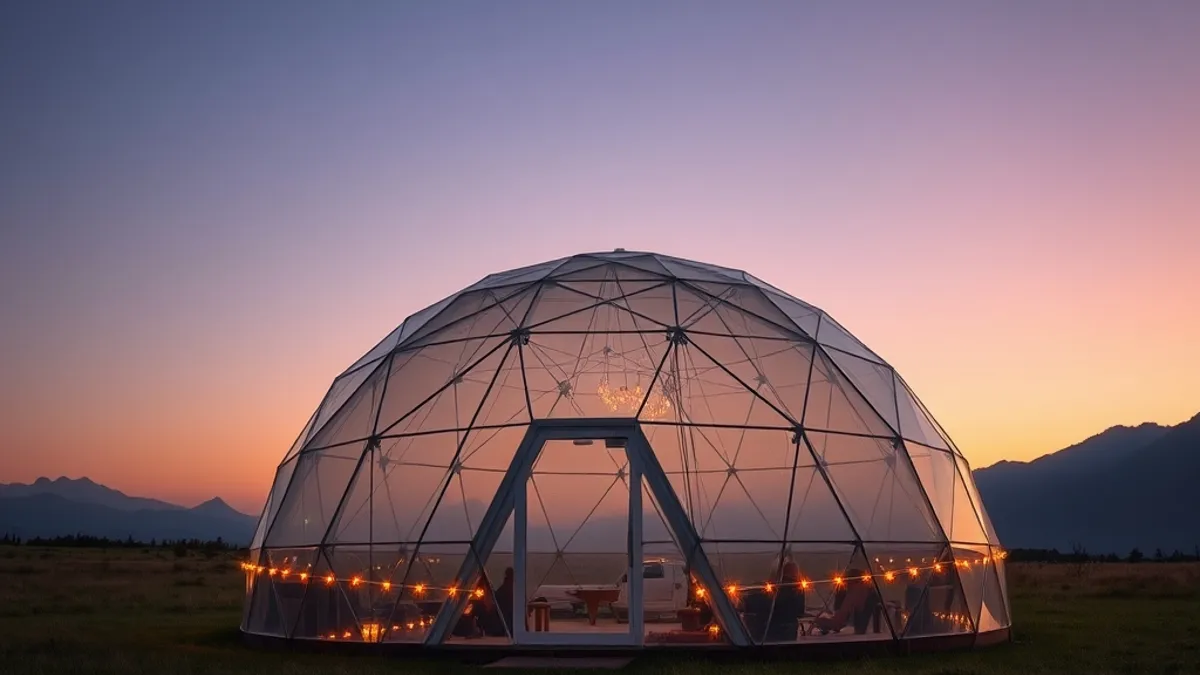
Safari tents usually sleep 2-5 guests and come with a real bed, linens, lighting, and a covered deck where you can sit with morning coffee. Domes and yurts often add heating, small kitchens or kitchenettes, and panoramic windows that frame the landscape. Cabins and A-frames are the most hotel-like of the bunch, frequently offering private bathrooms and full kitchens. Choosing between them is a bit like weighing character against convenience in any accommodation decision, and it’s worth thinking about honestly before you book, much as this guide on long-term comfort in a major purchase suggests weighing lifestyle needs before committing.
- Tent-style stays suit atmosphere seekers. The canvas walls mean you hear the outdoors, and the covered deck becomes your living room, but you should expect shared bathroom blocks rather than a private one.
- Domes and yurts suit comfort-with-views travelers. The panoramic windows let you watch the sunrise from bed, and a kitchenette covers basic meal prep without leaving your structure.
- Cabins and A-frames suit hotel-grade comfort fans. A private bathroom and a full kitchen mean your daily routine looks almost identical to being at home, just with better scenery out the window.
- Group size matters when picking a structure. A couple may be happy in a cozy dome, while a family of four or five will find safari tents and cabins more practical for space and sleeping arrangements.
The honest rule of thumb: pick tent-style if you want the outdoor feeling to be the point of the trip, and pick cabin-style if you want hotel-grade convenience with a nature backdrop. Neither choice is wrong, they simply deliver different experiences.
How to Book a Glamping Site and When to Reserve
Booking a glamping site is straightforward, but timing matters more than most first-timers expect. The most photogenic structures — the domes with panoramic windows, the safari tents on the best-facing decks — are usually the first to be reserved, often weeks or months before less popular units at the same site. Peak glamping season runs roughly May to October in most temperate regions, which concentrates demand into a fairly narrow window. Follow a few simple steps and you’ll avoid both disappointment and last-minute stress.
- Reserve well ahead of your dates. Book 2-3 months ahead for summer weekends and 4-6 months ahead for holiday periods. Last-minute availability exists but is unpredictable, especially for domes and cabins with private bathrooms.
- Plan around the minimum stay. Most sites require a minimum stay of 2 nights on weekends, so build your trip around that rather than hoping for a one-night exception.
- Confirm the check-in and check-out times. Check-in is usually mid-afternoon, around 3-4 pm, and check-out is late morning, around 10-11 am. Confirm both with your specific site before travel so you can plan your drive and meals accordingly.
- Read the listing line by line. What’s included varies by site: linens, towels, kitchen gear, and firewood are provided at some locations and not at others. Note exactly what’s listed so you don’t pack duplicates or arrive missing essentials.
- Message the host with questions before booking. If anything in the listing is unclear, ask. Reputable hosts answer quickly, and their response tells you a lot about what the stay will be like.
Once your booking is confirmed, save the confirmation details on your phone, including directions and the host’s contact information. Many glamping sites sit 15-45 minutes from the nearest town, often down unmarked gravel roads where phone signal is limited or nonexistent. Screenshot the map, download offline directions, and store the host’s number somewhere you can reach it without service. If you’re arriving after dark, mention it to your host in advance — finding an unlit tent path at night is nobody’s idea of a smooth check-in. A little preparation here makes arrival day far more relaxed, and lets you start enjoying the fire pit instead of troubleshooting it.
What a Glamping Site Typically Costs
Glamping pricing varies more than most first-timers expect, but the general range is easy to plan around. Nightly rates typically start at about $100 for a basic tent-style structure and climb past $400 for premium domes or cabins, especially those with standout views or high-end furnishings.
What drives the price up? In most cases, it comes down to the features attached to the unit. A structure with its own private bathroom, a hot tub on the deck, a kitchenette or a dramatic scenic location will sit at the top of the range. A simpler tent with shared facilities and a standard setting will sit near the bottom.
Add-Ons to Budget For
Many sites charge separately for extras that sound minor but add up over a multi-night stay. Firewood bundles, breakfast packages and activity rentals like kayaks or bikes are the most common examples. Check the listing before you book so you can estimate the real total rather than just the nightly rate.
Timing also matters. Midweek stays in shoulder season months such as May, early June and September often cost noticeably less than peak summer weekends. If your schedule is flexible, shifting your trip by even a couple of days can stretch your budget significantly without changing the experience.
Amenities and Facilities to Expect On Site
The level of facilities at a glamping site depends heavily on the type of structure you book. Tent-based sites commonly rely on shared bathroom and shower blocks, which are usually clean and well maintained but require a short walk from your tent. Domes and cabins more often include private bathrooms, so if that matters to you, filter your search accordingly.
Beyond the essentials, most sites provide communal extras that make the stay feel more social and comfortable. Fire pits, BBQ grills, hammocks and outdoor seating areas are standard at many properties, and they are often the best part of the evening.
- Laundry access: Some sites have washer and dryer facilities for guests, which is handy on longer trips, but many do not, so pack enough clothing for the full stay.
- Parking arrangements: At many sites you park in a central lot and walk your bags to your structure, sometimes over gravel or grass paths, so packable bags beat hard suitcases.
- Pet policies: A number of glamping sites welcome dogs, but they often charge a fee or restrict pets to certain units, so confirm before booking.
- On-site farm or shop: Some properties sell basic supplies, coffee or local produce on site, which helps if you run short on something mid-stay.
Two things to verify before you arrive: whether cooking facilities and refrigeration are provided, and whether drinking water is available on site. Both vary widely between properties, and assumptions here lead to the most common first-timer frustrations.
Wi-Fi and phone signal can also be limited, especially at sites located 15-45 minutes from the nearest town. Treat connectivity as a bonus rather than a given, and let work contacts or family know you may be hard to reach.
What to Pack for Your First Glamping Trip
Packing for glamping is lighter than packing for camping, but a few items make a real difference. The biggest surprise for most first-timers is how cold it gets at night. Even in the summer months, temperatures drop once the sun goes down, so bring layered clothing and warm sleepwear rather than assuming a t-shirt will do.
Pathways between structures at many sites are unlit, so a flashlight or headlamp is essential for the walk to the bathroom block or fire pit after dark. Your phone flashlight works in a pinch, but a dedicated headlamp keeps your hands free.
Toiletries deserve a spot on your list too. Even sites that provide linens rarely supply full-size shampoo, soap and other basics, and flip-flops are a smart addition if you will be using shared showers. A reusable water bottle is worth carrying around the site all day.
- Extra blanket or throw: Even heated structures can feel drafty in the early morning hours, and a familiar blanket adds comfort on cool evenings spent outside.
- Bug spray: You are still outdoors, and mosquitoes are active around dusk near fields, ponds and wooded areas at most rural sites.
- Book or downloaded entertainment: With limited Wi-Fi at many sites, offline options for quiet evenings beat relying on streaming.
- Small first-aid kit: Bandages, antiseptic wipes and pain relievers cover the minor scrapes and headaches that happen far from a pharmacy.
Finally, think about food before you leave home. Because many glamping sites sit in rural spots well away from shops and restaurants, a forgotten item can turn into a long drive you did not plan for. Pack your groceries, snacks, coffee and cooking staples in advance, and check the site’s listing to see whether basics like drinking water, cooking oil or salt are provided. Arriving with a stocked cooler means your first evening can be spent by the fire instead of hunting for a supermarket that may have already closed.
Wrapping Up Your First Glamping Stay
A first glamping trip stops feeling mysterious once you know the basics: you get real beds, heating and fully furnished structures in an outdoor setting, without hauling a tent or sleeping bags anywhere. Since many sites sit a short drive out of town, it helps to arrive prepared — shared or private bathrooms, fire pits and limited Wi-Fi are all part of the deal rather than a surprise on arrival.
Planning stays simple too. Booking 2-3 months ahead for summer weekends and expecting roughly $100-$400 per night keeps your budget and timeline realistic, while knowing the check-in and check-out times, the amenities on offer and what to pack means no surprises when you pull up. If this guide helped you picture your first stay, leave a comment with your questions or share it with a friend who is planning their own glamping trip.