Planning a safari is exciting until you start comparing lodges and realize there are hundreds of them across Africa, at prices ranging from a few hundred dollars a night to well over a thousand. Picking the right lodge for your safari is not about finding the most expensive option or the one with the best photos. It is about matching the camp to your destination, your season, your budget and the way you actually like to travel.
This guide walks you through the decision step by step. We start with destination and season, because those choices shape everything else. Then we cover realistic budgets, the main lodge types, the trade-offs between staying inside or outside the park, what a nightly rate should include, and how far ahead to book. By the end, you will have a clear checklist for comparing camps and booking with confidence.
Start With Destination and Season Before Picking a Lodge
Before you browse a single lodge website, decide where and when you want to travel. The region you choose determines which animals you will realistically see, and the season determines how easy they are to find. Get these two things right first, and choosing a lodge becomes far simpler.
Match the region to the wildlife
Want to witness the Great Migration? Plan for the Serengeti in Tanzania or the Maasai Mara in Kenya, where the river crossings peak between July and September. If your priority is the Big Five without a narrow window, South Africa’s Kruger National Park offers strong year-round game viewing. Each region has its own rhythm, so build your trip around the animals that matter most to you.
Choose your season
The dry season from June to October concentrates wildlife around water sources, making animals easier to spot. The green season from November to March brings lower rates, often 30-50% cheaper than peak season, along with lush landscapes and far fewer vehicles at sightings. Photographers often prefer the green season for its dramatic skies and newborn animals.
Whichever season you pick, plan on a 3-4 night minimum stay at one lodge. That gives you enough game drives to settle into the rhythm of the bush and still have rewarding sightings even on slower mornings.
Set a Realistic Safari Lodge Budget
Safari lodge prices vary enormously, so it helps to know what each tier typically delivers before you commit to a booking. Mid-range lodges usually run roughly $250-600 per person per night, and that rate typically covers meals, game drives and park access from the lodge. You get comfortable rooms, solid food and professional guiding without the extras that push prices into the stratosphere. For many travelers, this tier hits the sweet spot between cost and experience.
Luxury camps start around $800 and can exceed $1,500 per night. What you are paying for is not just nicer tents and plusher beds. High-end camps often include private guides, fewer guests per vehicle and access to exclusive concessions where you can sit at a leopard sighting without three other vehicles crowding in. Some also add extras like private dinners, spa treatments and personalized itineraries that mid-range properties rarely match.
Whatever tier you choose, the nightly rate is only part of the total cost. Set money aside for these common extras:
- Internal flights: light-aircraft hops between parks are usually priced separately from your lodge stay and can add up quickly on multi-stop itineraries.
- Tips: tipping camp staff and guides is customary, commonly around $10-20 per guest per day, so factor this into your cash budget.
- Premium drinks: many rates cover house wines and local beers, but top-shelf spirits, champagne and imported wines are often billed separately.
Green-season travel can also stretch your budget further, since rates often drop 30-50% below peak-season prices. Check current rates directly with lodges or operators, since prices shift from year to year and between seasons, and always confirm exactly what a quoted rate includes before you pay a deposit.
Choose the Right Lodge Type for Your Travel Style
Safari accommodations come in several distinct styles, and the best choice depends on who you are traveling with and how close to nature you want to sleep. There is no single best option, only the best fit for your trip.
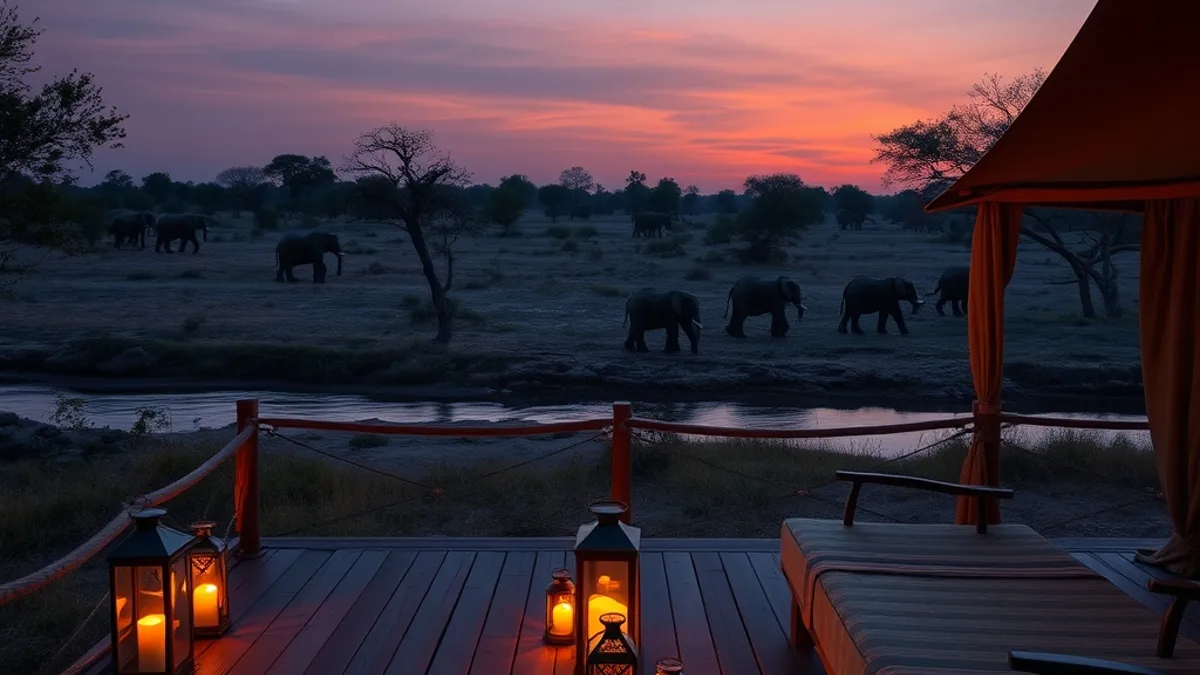
Permanent lodges suit families and first-time safari-goers well. With solid walls, swimming pools and reliable amenities like air conditioning and Wi-Fi, they offer a comfortable base after long days in the vehicle. Tented camps trade some polish for atmosphere: canvas walls, bush sounds at night and a feeling of being genuinely immersed in the landscape. Mobile camps take it a step further, packing up and relocating seasonally to follow the migration herds.
If your budget stretches further, private conservancy camps open up experiences that public parks simply cannot offer. Here is how the main types compare:
- Permanent lodges: the easiest option with kids, since fenced grounds, pools and set mealtimes make logistics predictable.
- Tented camps: expect en-suite bathrooms and comfortable beds, but be ready for cooler nights and the occasional insect visitor.
- Mobile camps: ideal if the migration is your goal, because they reposition to the best grazing areas throughout the year.
- Private conservancy camps: the higher price buys night drives, walking safaris and off-road driving to approach animals, all of which are restricted in national parks.
Think honestly about your comfort threshold before booking. A romantic canvas camp can be magical, but not if you spend the night worrying about hippos outside your tent.
Location Matters: Inside the Park or Outside the Gates
One of the biggest differences between a good safari and a great one is simply where you sleep. Lodges located inside a national park or on a private conservancy let you roll out of bed and be tracking wildlife within minutes. That means you can start game drives at dawn, exactly when predators like lions and leopards are most active before the heat of the day sets in.
Lodges outside the gates are usually cheaper, but there is a trade-off. If your camp sits one to two hours from the park entrance, you spend the best hours of the morning queuing at the gate or driving on public roads instead of watching animals. The same problem repeats in the evening, when you have to leave the park before sunset and miss the last, often most productive, light of the day.
Think beyond the gate
Proximity matters on a finer level too. If your heart is set on seeing river crossings during the Great Migration, look for camps near the migration corridors and crossing points on the rivers, not just near the nearest town. A map check before booking can save you hours of driving each day and put you in position for the sightings you came for.
Compare Inclusions, Guides and Camp Size
Safari pricing is notoriously inconsistent, and two lodges quoting similar nightly rates can deliver very different value. Some rates are all-inclusive, covering everything from meals and game drives to laundry, while others are game packages where drives, drinks and entry costs are billed separately. Before you compare prices, confirm exactly what each rate includes, because a cheaper-looking lodge can end up costing more once the extras are added. Ask the camp to email you a full breakdown of inclusions so you can compare offers side by side.
Camp size and staffing matter just as much. Small camps with 10 to 20 rooms tend to offer a more personal experience and experienced resident guides who know the area intimately. Large properties with more than 100 rooms often rotate staff and guides, which makes it harder to build the kind of rapport that turns a standard drive into a memorable one. If a particular guide matters to you, request one in writing when you book.
When you contact a camp, ask these specific questions:
- Vehicle occupancy: six guests per vehicle is a good benchmark; anything more means window seats and photography angles get crowded.
- Shared versus private drives: some camps include shared drives in the rate and charge a premium for a private vehicle and guide, which is worth it for serious photographers.
- Drinks policy: find out whether only water is included or whether soft drinks, house wine and spirits are part of the package.
- Park fees: ask whether conservation or entrance fees are billed at booking or collected separately on site, and check the current rate before you travel.
Booking Timing and Practical Checks
Safari lodges are small, and the best camps in popular areas sell out long before the season starts. Unlike large hotels, a camp with a dozen tents can be fully booked months in advance, which is why timing matters so much here. Booking at the right moment is often the difference between your first-choice lodge and whatever still has availability when you finally call. It also affects your wallet: the same tent can cost noticeably more once demand rises close to peak dates. A short list of checks before you confirm will also protect you from unpleasant surprises later, from unexpected child restrictions to unclear cancellation terms.
- Reserve early for peak season. For travel during the June to October dry season, book popular lodges 9 to 12 months ahead, since the best small camps fill first.
- Relax the timeline in green season. For November to March travel, booking 3 to 6 months in advance is usually enough, and you may even find last-minute availability at lower rates.
- Read recent reviews carefully. Look past star ratings and focus on comments about food quality, guide standards and how the camp handled weather disruptions such as heavy rain or flooded roads.
- Verify child policies. Some camps have minimum-age rules for game drives or restrict children to certain tent categories, so confirm before booking if you travel with kids.
- Check health requirements. Ask your operator about malaria-zone precautions and what your lodge provides, such as mosquito nets and screened rooms.
- Ask about single supplements. Solo travelers often face a surcharge, and policies vary widely between camps, so get the rule in writing before you pay a deposit.
Once these checks are done, confirm your booking in writing and keep a copy of the rate, inclusions and cancellation terms. Ask specifically what happens if your flight is delayed or a camp closes unexpectedly, since rebooking policies differ from one operator to the next. It also helps to reconfirm your arrival details a week or two before travel, as many remote camps are reached by light aircraft and need accurate passenger weights and timings. A little diligence at this stage means you arrive at camp knowing exactly what you paid for, what is included each day, and who to contact if anything goes wrong along the way.
Finding the Right Lodge Made Simple
With hundreds of safari lodges across Africa at wildly different prices, choosing one can feel overwhelming. The good news is that the decision gets much easier when you work in the right order. Fix your destination, season and budget first, then match lodge type, location and inclusions to them. A tented camp that looks perfect on paper is only right if it sits near the wildlife you want to see and its rate covers what you actually need.
Timing matters too. Book early for peak season, since the most sought-after camps fill up many months ahead, and always compare what each nightly rate actually includes before you commit. Do that, and you will end up with a lodge that fits your trip instead of fighting it. If this helped you plan, leave a comment or share the article with a fellow traveler.