Glamping looks simple on the surface: a tent, a bed, a night under the stars. Then you start searching and find one stay at $110 per night and another at $600, with no obvious explanation. The glamping cost of a trip depends heavily on the type of accommodation you pick, and budgeting without knowing those price bands is nearly impossible.
This breakdown walks you through what each stay type actually costs per night, from basic canvas tents to luxury lodges with hot tubs. You’ll also see how season and timing shift prices, which hidden fees sneak onto the final bill, and how to squeeze more value from the same budget. By the end, you’ll be able to match a stay type to your wallet instead of guessing.
What Glamping Actually Costs per Night
Most travelers are surprised by how wide the glamping price range is. A simple canvas tent with real beds can cost a quarter of what a luxury lodge charges for the same night in the same region. That spread is why glamping works for so many budgets: the same activity can feel either like an affordable weekend away or a splurge-worthy celebration, depending on what you book.
Understanding the general price bands helps you filter search results quickly and focus only on stays that actually fit your budget. Instead of scrolling through hundreds of listings, you can narrow your search to one or two categories and compare those directly.
Keep in mind that prices vary by region, amenities and how established the operator is, so treat these figures as starting points rather than fixed rates. A basic tent near a popular national park can cost more than a dome in a quieter area. Always check current rates directly with the site, since they change from year to year.
Here is what each tier typically includes for your money:
- Basic tent glamping: around $100-$200 per night. Expect a proper bed, lighting and often a fire pit, but bathrooms may be shared.
- Safari tents and yurts: typically $150-$300 per night. These usually add more space, furniture and sometimes a small kitchenette.
- Domed and elevated stays like treehouses: $200-$450 per night. Panoramic windows and private en-suites are common at this level.
- Luxury lodges and premium cabins: $400-$800 or more per night. Full kitchens, hot tubs and high-end finishes put these closer to a boutique hotel experience.
Glamping Cost by Stay Type: Tents, Yurts and Domes
Canvas bell tents are the entry point into glamping. You typically get a real bed, linens and cozy decor on a solid platform, but bathrooms are often shared facilities a short walk away. This is the option that feels most like camping while still letting you skip the air mattress, so it suits travelers who want a gentle introduction rather than a full luxury experience.
Yurts step things up with a solid circular structure, better insulation and usually some form of heating, which pushes prices higher than basic tents. That heating matters more than you might think: a yurt can be comfortable in shoulder seasons when a canvas tent would feel damp and cold at night. If you are planning a trip in May or October, this difference alone can decide which stay type to book.
Domes and treehouses: paying for the view
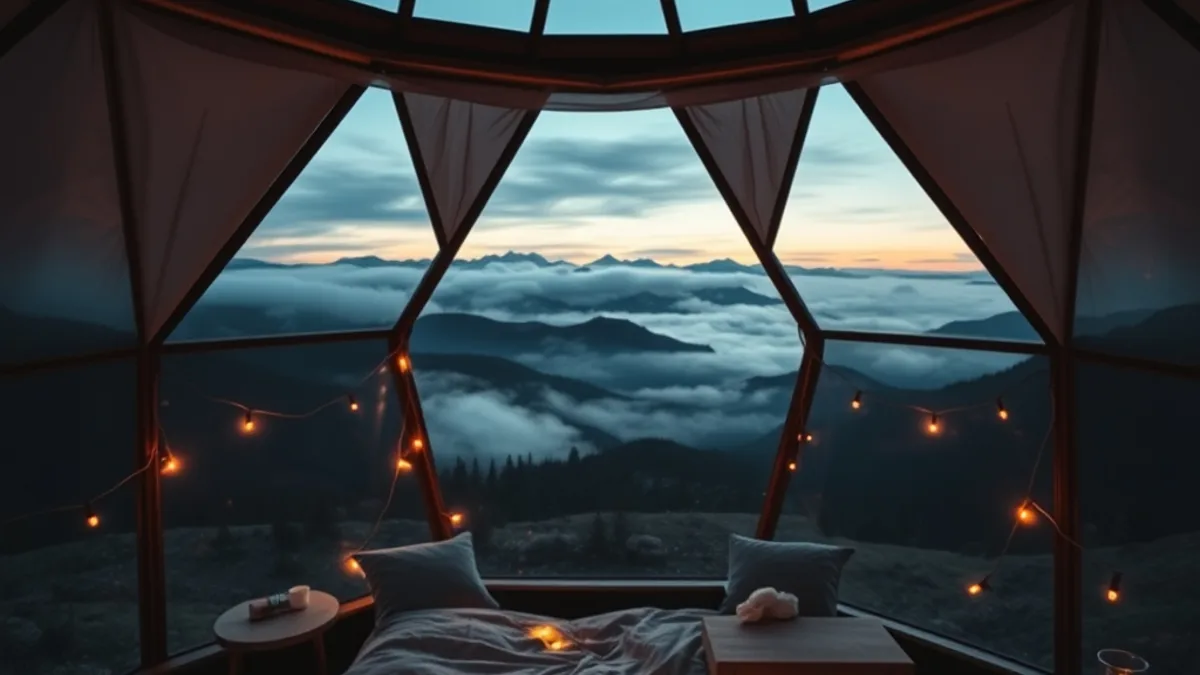
Geodesic domes command a premium, and the price is largely about the experience. Panoramic windows, private en-suites and stylized interiors make them the most photographed option, and operators price them accordingly. Expect the nightly rate to sit noticeably above tents and yurts, often in the $200-$450 range.
Treehouses sit at the top of the novelty range, frequently toward the upper end of that same $200-$450 band. Elevated builds cost more to construct and maintain, and the sense of sleeping in the canopy justifies a premium for many travelers. If the novelty is the main draw, consider booking fewer nights at a treehouse and pairing the trip with cheaper stays elsewhere, which keeps the splurge special without stretching the whole budget.
Cabins, Pods and Lodges: The Premium End of Glamping
Glamping pods and small cabins sit in the middle of the market, and it’s easy to see why they’re popular. They offer solid walls, real doors and proper weather protection that canvas can’t match, so you get the countryside without any tent-related compromises. Rain on the roof at night beats rain on a tent fly, especially if you’re new to outdoor stays.
At the top end, luxury lodges with full kitchens and hot tubs blur the line with boutique hotels. Expect quality furniture, well-designed interiors and amenities that make it easy to spend the whole evening on site rather than heading out to restaurants. For many travelers, that self-contained comfort is the whole point of choosing a lodge over a tent.
Why bigger units can be better value
Larger pods and lodges often sleep 4-6 people, which changes the math considerably. When you split the nightly rate between four travelers, the per-person cost can end up lower than each of you paying for a separate budget tent. If you’re traveling as a group or a family, always compare per-person costs rather than nightly rates before you book.
Premium stays also usually include private bathrooms, something tents and yurts may lack. That single amenity can offset part of the price gap, especially on longer trips where shared facilities become tiring. Add in a kitchen or kitchenette, and you can save on meals out too. Weigh what’s included against the nightly rate before deciding the cheaper option is actually cheaper — and check the total checkout price, since service fees are common on these listings.
How Season and Timing Change Glamping Prices
Timing is the single biggest lever you have over your glamping bill. The same safari tent or dome that books at a premium in peak season (June-August) typically costs 30-50% more than it does in shoulder season. That is a huge swing for the exact same bed, stove and view.
If your dates are flexible, aim for May, September or October. You get the same stays at noticeably lower rates, and in many regions the weather is still pleasant enough for evenings around the fire. Fall foliage trips in September and October are especially good value.
Midweek beats weekends every time
Friday and Saturday nights carry the highest demand, so midweek nights often cost 15-25% less. A Sunday-to-Wednesday stay can shave a meaningful amount off a four-night trip, and sites are quieter too. If you work remotely, even one or two midweek nights makes a difference.
When you do want a summer weekend, do not wait for a last-minute deal. Booking 2-4 months ahead locks in the best availability, because popular sites often have only a handful of units. Check cancellation policies before you commit so you have an exit if plans change.
Hidden Fees That Add to Your Glamping Bill
The nightly rate you see in search results is rarely what you actually pay. Glamping sites and hosts add fees at checkout, and some of them are easy to miss until the final screen. Before you book, always compare the total checkout price, not the advertised nightly rate.
The most common add-on is a cleaning or service fee, which commonly adds $25-$75 per booking. On a one-night stay, that can add a significant percentage to your bill, which is another reason longer stays stretch your money further. Some sites fold this into the rate, others list it separately, so read the price breakdown carefully.
Beyond cleaning, watch for these extras that show up at checkout:
- Pet fees: dog-friendly sites often charge a per-stay or per-night pet fee, typically in the $10-$50 range, and some require prior approval or restrict pets to certain unit types.
- Firewood bundles: many sites ban gathering wood on-site, so plan on buying bundles from the host or a local stand, usually $10-$50 depending on how many nights you plan to burn.
- Activity add-ons: kayak rentals, guided walks and breakfast baskets are common upsells, and each can add $10-$50 or more to a stay that looked cheap when you booked.
One more thing to check before you fall in love with a listing: minimum-stay requirements of 2-3 nights are common on weekends and holidays. A site that appears affordable per night may effectively require a larger total commitment, which matters for a quick overnight getaway.
How to Get More Value From Your Glamping Budget
Glamping does not have to blow your travel budget. With a few deliberate choices, you can stay in a dome with panoramic windows for less than the cost of a mediocre hotel room. It starts with how you split the cost, and it ends with knowing what you are really paying for.
Share the big units
Larger stays reward groups. A geodesic dome or lodge that sleeps four to six people costs far less per person than a basic tent booked solo, so bring friends or another couple and everyone wins. Split the total between four people and even a premium unit can come out cheaper per head than a modest hotel room. The trick is to compare per-person cost, not the nightly rate on the listing.
Pick your dates and do the math on what is included
Choosing shoulder-season midweek dates instead of peak summer weekends is the fastest way to save on the identical unit. If you have flexible schedule, shift your trip by a few weeks and the same dome or cabin often drops dramatically in price.
Also weigh what is included in the rate. A private bathroom and a kitchen mean fewer campground shower lines and fewer meals out, which offsets a higher nightly price. Cooking two dinners in the unit can easily cover the gap versus a cheaper stay with shared facilities.
Finally, resist the temptation to hunt for last-minute deals in high season. They rarely appear for summer weekends, and waiting usually means settling for whatever is left. Plan early, lock in your preferred unit, and spend the savings on experiences instead.
Wrapping Up: Budgeting for Your Glamping Trip
So, how much does glamping cost? The honest answer is that it depends on what you sleep in. Prices span roughly $100-$800 per night, from a simple canvas tent to a full-service luxury lodge, and each stay type sits in its own predictable band. Once you know whether you’re booking a tent, a yurt, a dome or a lodge, budgeting stops being guesswork and becomes simple arithmetic.
Keep two things in mind before you book. Season and timing can shift your total by 30-50%, so the same dome costs very different amounts in July and October. And hidden fees like cleaning charges can quietly add to the final bill, so always check the total checkout price rather than the nightly rate. Get those pieces right and your budget will hold. Have a glamping trip planned, or a cost question we didn’t cover? Leave a comment or share this article with a friend who needs it.